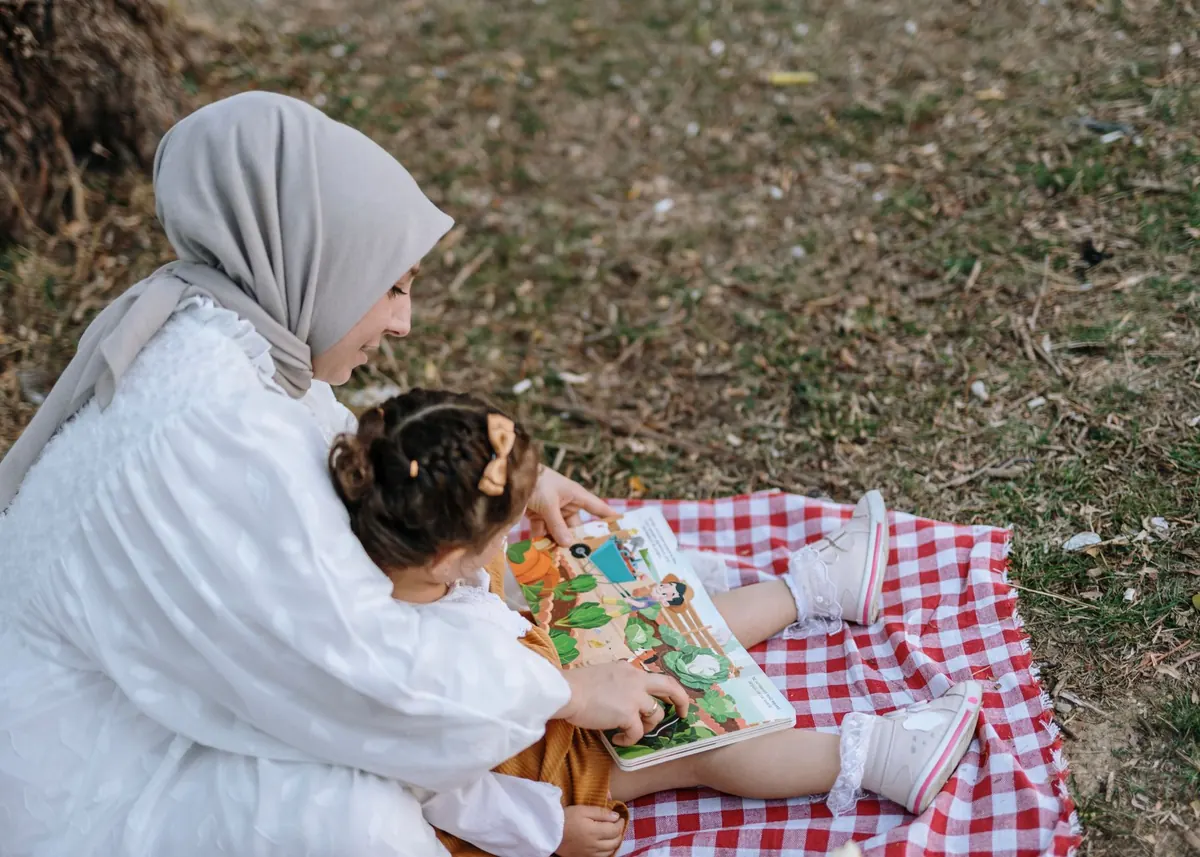
Read half a dozen fairy tales in one sitting and something odd happens: the stories start to rhyme. A youngest child leaves home with nothing, meets a stranger who offers help at a price, fails twice and succeeds on the third attempt, and comes back changed — or comes back rich, which in fairy tales often amounts to much the same thing. That repeated shape has a name, and once you have spotted it you will see it in Cinderella, in Jack, in Gretel, and in the miller's youngest son who is given nothing but a cat.
What the hero's journey is, in plain terms
Joseph Campbell's The Hero with a Thousand Faces (1949) argued for a recurring pattern he called the monomyth: a hero leaves the world they know, is tested, and returns altered. Christopher Vogler later reshaped that into a practical twelve-stage outline for screenwriters — the ordinary world, the call to adventure, the mentor, the ordeal, the road back — and that is the version most readers meet first.
Fairy tales are the leaner, older relatives of that outline. Where a myth can sprawl across a hundred pages, a tale does its work in two or three. Vladimir Propp, analysing Russian wonder tales in the 1920s, found that they reuse a limited set of moves in a fairly strict order: an absent family member, a prohibition, a departure, a donor who tests the hero, a difficult task, recognition. Different vocabulary, same skeleton.
One caution before we go further: the hero's journey is a lens, not a law. Some tales refuse it entirely, and the ones that do are often the most interesting.
The stages, and how fairy tales shorten them
Strip the twelve-stage version down and it maps onto the classic tale almost beat for beat. The fairy tale simply takes the quiet parts and turns them into a single sentence.
- Ordinary world: the cottage at the edge of the wood, the mill, the kingdom under a spell.
- Call to adventure: the stepmother's cruelty, the father's errand, the golden bird that must be found.
- Hesitation: the youngest son dawdles; the heroine sits down and weeps. Brief, but usually present.
- Meeting the mentor: the old woman at the crossroads, the fox, the grateful dwarf.
- Crossing the threshold: the forest's edge, the glass mountain, the door that should not be opened.
- Tests, allies, enemies: three nights in the castle, the riddle, the false bride.
- The ordeal: the giant's kitchen, the witch's oven, the night spent in the haunted chapel.
- The reward: the golden goose, the singing bird, the princess's hand.
- The road back: the chase, the flight, the forbidden glance backwards.
- Transformation: recognition, the slipper fitting, the spell breaking.
- Return: the wedding, the inheritance, the lesson carried home.
Notice how little interior life there is. The tale does not pause to explain why the hero is brave. It shows a threshold, then a task, then a consequence.
Departure: why fairy tales begin at home
The opening of a tale is almost always a household in trouble. Cinderella is not unhappy in the abstract; she is set to work while her stepsisters go to a ball. Hansel and Gretel are not lost in a metaphorical sense; they are left in a wood because there is not enough food. Jack is sent to market with a cow.
That grounding matters. The call to adventure only lands because the ordinary world has been made specific. A forest is frightening because we have just spent two paragraphs in a kitchen.
The threshold is usually literal, too — a river, a gate, the line of trees. When you retell a tale, keep that moment visible. It is the hinge the whole story turns on.
The middle: helpers, gifts and the rule of three
Helpers rarely arrive by accident
In most tales the hero is given something: a cloak, a whistle, a directions-bearing fox, a goose that laughs. The gift is usually earned through a small, unglamorous kindness — sharing a meal with an old man, sparing an ant, refusing to abandon a companion. This is the structure's moral engine. The hero does not succeed because they are strong; they succeed because they were decent when it cost them something.
The rule of three does the pacing
Two failures and a success. Three brothers, three tasks, three nights. The repetition is not laziness; it is how an oral story holds an audience and builds expectation. If you are writing your own version, this is a gift. Fail twice quickly and let the third attempt take up half the story.
Return and recognition
Many of the best tales are not really about winning the prize but about proving you won it. The reward is gained two-thirds of the way through; the rest is the journey home, and it is often where the villain makes a last attempt. A false bride takes the credit. The hero is forgotten, enchanted, or left behind.
So tales invent tokens: the slipper, the ring dropped in a cup, the impossible colour of hair, the wound that will not heal. These are the props that make recognition possible, and they are the reason a story can end with a satisfying click rather than a shrug. If your retelling feels flat at the finish, it is usually because the hero wins something but nothing proves it.
Where the pattern bends — and why that is useful
Plenty of tales sit awkwardly inside the hero's journey. Sleeping Beauty and Snow White are acted upon rather than acting; their journey belongs to the people around them. Others follow a villain or a curious wife, as in Bluebeard or The Robber Bridegroom, and end with escape rather than reward.
And some refuse the uplift entirely. The Fisherman and His Wife closes with the couple back in their original hovel, having wished their way through every rank of creation and lost the lot. That is not a failure of structure; it is a different shape — a warning tale rather than an ascent. Knowing which of the two you are writing changes everything about the ending.
Using the shape in your own retellings
The value of the outline is practical. It gives you a checklist when a tale feels baggy or thin.
- Name the ordinary world in one concrete detail. A shoe, a loaf, a borrowed axe.
- Make the threshold a physical thing. Readers remember crossings, not decisions.
- Earn the helper. Kindness first, gift second, rescue third.
- Hold something back for the return. The most satisfying endings add a proof, not a prize.
- Decide whether you want ascent or warning. Both are honest; mixing them muddles the story.
Read a tale aloud when you have finished. These stories were built for the voice, and the beats that survive the journey from page to ear are the ones worth keeping in your version.
Photo: Nordseher / Pixabay